Lama Temple
Beijing’s most active Tibetan Buddhist temple, featuring an 18-meter Buddha statue carved from a single sandalwood tree. Incense-filled halls, ornate Tibetan architecture, and a serene atmosphere make this a must-visit.
Why It’s Worth Visiting
The Lama Temple is Beijing's most atmospheric religious site — a working Tibetan Buddhist lamasery where incense smoke, chanting, and maroon-robed monks create an experience no museum-style temple can replicate. The 18-meter sandalwood Maitreya Buddha, carved from a single tree, is among the most extraordinary objects in China.
Compact, reverent, and unlike anything else on this list, it is the place visitors consistently describe as 'the surprise of the trip' — a 90-minute immersion in living faith that feels a world away from the crowds of the palace and the square.
What to Expect
The Lama Temple is the most active, most atmospheric temple complex in Beijing — and the least museum-like. Smoke from stick incense curls through five courtyards in succession, each hall denser with devotion than the last, and the ritual has not stopped since the Yongzheng Emperor's former residence was converted to a lamasery in 1744.
The finale is the Pavilion of Ten Thousand Happinesses, which houses the 18-meter-tall Maitreya Buddha carved from a single sandalwood tree — the largest such statue in the world. The tree was brought from Nepal in the 18th century; standing beneath the statue's serene face, looking up 18 meters of single wood, is the kind of encounter no photograph prepares you for.
Come with eyes open to the rituals. You will see visitors light three incense sticks, hold them above their heads, and bow three times toward each direction of the compass. Lamas in maroon robes walk the courtyards between prayers. This is not a performance for tourists — it is a working temple, and that authenticity is precisely the draw.
The temple is a lesson in Tibetan Buddhist art. From the ornate, multi-layered Hall of the Wheel of Law with its giant prayer wheel to the gilt-roofed halls roofed with friezes of Sanskrit mantras, the details reward slow looking. The centerpiece buildings follow a strict north-south sequence, each courtyard a step deeper into the Tibetan-Buddhist tradition the Qing emperors patronized as a diplomatic bridge to their Tibetan and Mongolian territories.
A visit threads the whole experience into one flowing walk — five halls, one main axis, about 90 minutes — then spills you out into the Guijie (Ghost Street) restaurant district for a well-earned meal. It is compact, reverent, and unlike any other site in Beijing.
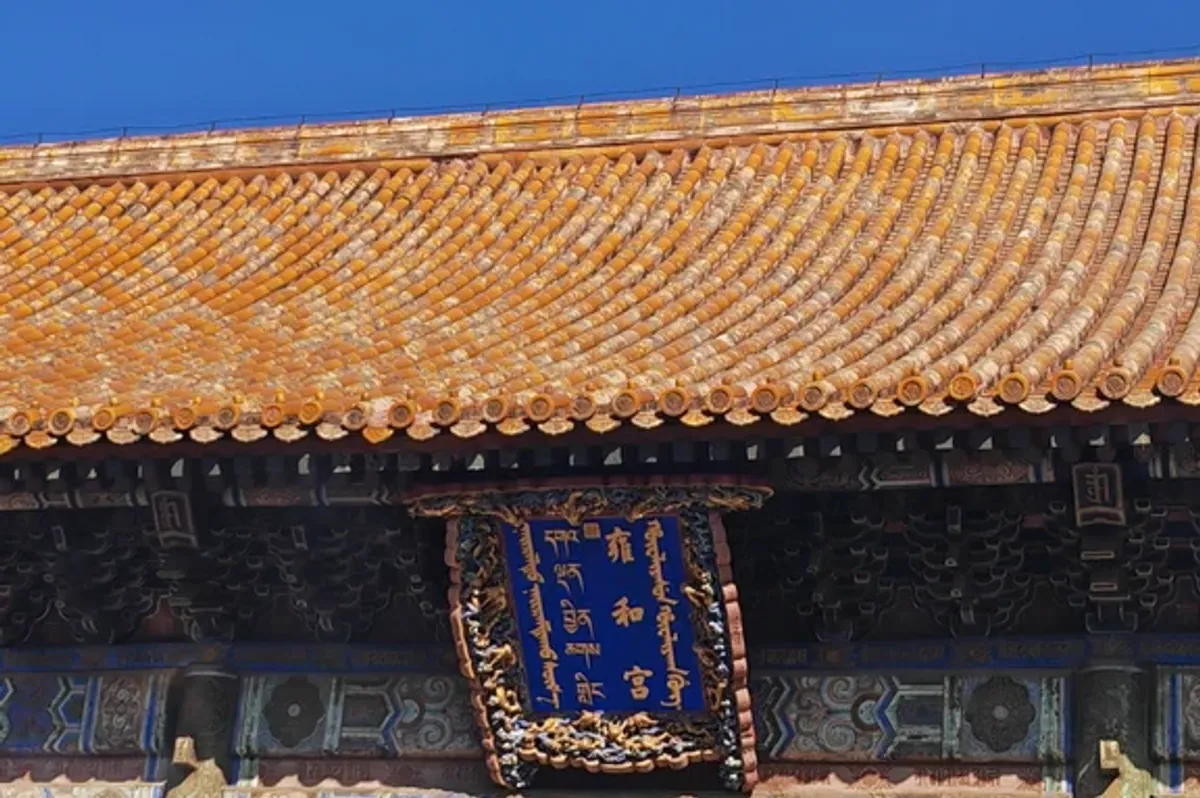
The fifth hall exterior from the courtyard, with incense smoke drifting across the frame — it captures the temple’s active spiritual life. Morning light (8-10am) angles through the smoke beautifully.
| Ticket Price | CNY 25 |
| Duration | 1.5-2 hours |
| Nearest Subway | Yonghegong (Line 2/5), Exit C |
| Best Season | Year-round |
| Best For | All visitors, including families |
Must-See Highlights
- 18m Maitreya Buddha
- Hall of the Wheel of Law
- Incense ceremony
- Five main halls
How to Get There
Take Line 2/5 to Yonghegong station (Exit C). The attraction entrance is a short walk from the station.
Beijing subway operates from approximately 5am to 11pm daily. Fares range from CNY 3 to 9. English signage and announcements are available on all lines.
How to Spend Your Time
- 1
Enter through the front gate and work north through all five halls in sequence.
- 2
Pause in the Hall of the Wheel of Law for the giant sandalwood prayer wheel.
- 3
Reach the Pavilion of Ten Thousand Happinesses for the Maitreya Buddha.
- 4
Return via the western courtyard, where the incense and light make the best photographs.
Insider\u2019s Tip
Bring your own incense — the temple provides a small bundle but the proper ritual uses three sticks at a time. Hold them above your head, bow three times toward each cardinal direction. Observe locals to learn the rhythm.
A Bit of History
Originally built in 1694 as a residence for the Yongzheng Emperor before he ascended the throne, it was converted to a lamasery in 1744. The 18-meter Maitreya Buddha was carved from a single white sandalwood tree brought from Nepal and is listed in the Guinness World Records.
Beat the Crowds
Busiest during Chinese New Year. For a quieter visit, come on a weekday afternoon, Tuesday through Thursday. Mornings are when tour groups arrive.
Where to Eat Nearby
Guijie Street is a 10-minute walk south — red lanterns and restaurants open past midnight. Huajiayiyuan in a courtyard is the landmark for Beijing cuisine. Crayfish places are a classic late-night experience.
Best Photo Spot
The fifth hall exterior from the courtyard, with incense smoke drifting across the frame — it captures the temple’s active spiritual life. Morning light (8-10am) angles through the smoke beautifully.
Good to Know
- Entry is CNY 25 and includes a free bundle of incense at the ticket window.
- Visit on a weekday afternoon — mornings bring tour groups, weekends bring families.
- The temple is at Yonghegong station (Lines 2 and 5), Exit C.
- Guijie (Ghost Street) is a 10-minute walk south for the city's best late-night food.
- Photography is allowed in courtyards but is restricted inside several of the halls — watch the signs.
Lama Temple: Frequently Asked Questions
Is the Lama Temple a functioning temple?
Yes — it is one of Beijing's most active monasteries, with resident lamas, daily services, and a steady stream of worshippers. That living atmosphere is a large part of why it feels so different from other sites.
How long does a visit take?
About 90 minutes. The five halls follow one north-south axis, so the route is linear — walk in, progress hall by hall, and exit near where you started.
Can I burn incense at the temple?
Yes — the temple provides incense with your ticket. The common practice is three sticks held above the head and three bows to each direction. Observe locals to pick up the rhythm.
What is the 18-meter Buddha made of?
The Maitreya Buddha is carved from a single white sandalwood tree imported from Nepal in 1750. It stands 18 meters tall — 8 meters above ground and an estimated 10 meters below, in the statue's foundation.